
The Economic Case for Keeping Federal Offices in Small Towns
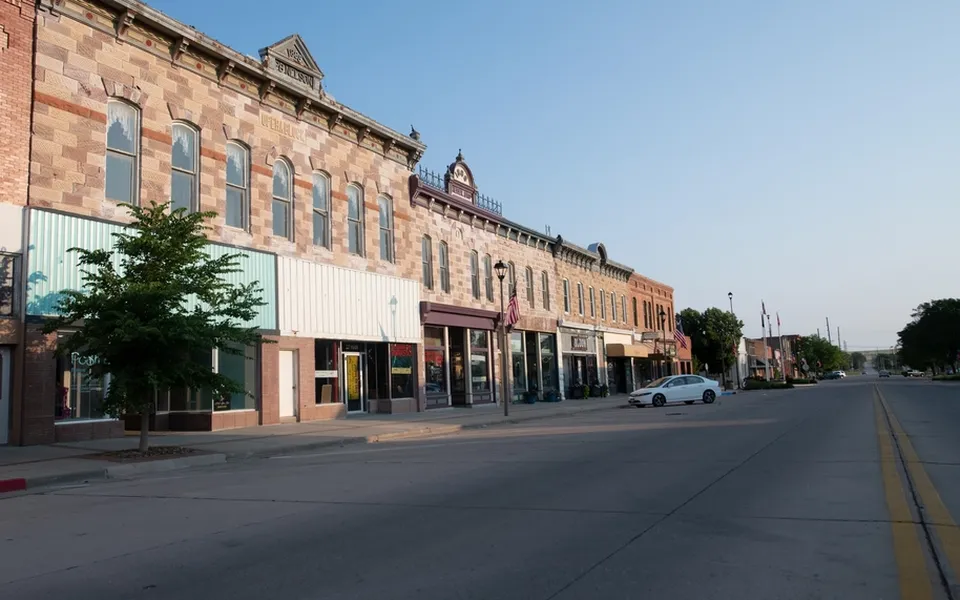
When the federal government evaluates where to locate or relocate a government office, it tends to apply urban metrics: proximity to major transportation hubs, access to a large labour pool, co-location with other federal facilities. These are reasonable administrative criteria. But they systematically undervalue what a federal office means to a small community — and the full economic cost of removing it.
How Urban Metrics Distort the Calculation
Federal real estate and workforce planning tends to optimise for administrative convenience. Clustering offices in downtown Edmonton or Ottawa reduces travel time for managers attending inter-departmental meetings. Consolidated facilities can share security, maintenance, and administrative staff. These savings are real and measurable.
What does not appear in this calculation is what happens to the community that loses the facility. Property values, local business revenues, school enrolment, and municipal tax base are not items on a federal cost-benefit ledger. They are absorbed by the municipality and its residents. The federal government books a saving; the community absorbs a loss that is often far larger in aggregate.
This asymmetry is not unique to the Vegreville situation. It is a structural feature of how federal infrastructure decisions get made. The costs and benefits fall on different parties, and only the costs visible to the decision-maker — the federal government — are counted in the analysis.
The Multiplier Effect in Small Communities
The economic impact of a major employer in a small community is proportionally much greater than in a city. In Edmonton, the loss of 280 jobs would barely register statistically. In Vegreville, 280 jobs represent close to 10 per cent of the entire workforce.
Each of those jobs generates additional economic activity through the local spending of its holder. Groceries, housing costs, vehicle maintenance, restaurant meals, children’s activities — all of this spending circulates through Vegreville’s businesses. When the CPC employees leave, that spending leaves with them. The businesses that depend on it contract, and some will close. The tax base shrinks, making it harder for the municipality to maintain services for a population that is simultaneously declining.
Economists call this the multiplier effect, and in small communities where local spending has few alternatives and limited ability to absorb shocks, the multiplier for a large employer closure is correspondingly severe.
What Impact Assessments Should Measure
The Town of Vegreville commissioned an independent socio-economic impact assessment precisely because the federal government had not done one before announcing the CPC closure. That assessment found projected consequences that are severe by any measure: a 30 per cent drop in residential property values, potential loss of 420 residents, and unemployment potentially doubling to 16 per cent.
A proper federal impact assessment process should capture these downstream effects before a decision is made, not after. It should account for property value impacts, school enrolment changes, municipal revenue consequences, and the difficulty of attracting replacement employers. Without this kind of analysis, the decision-making process is incomplete — and communities bear the cost of that incompleteness.
Making the Case for Rural Office Retention
The case for keeping federal offices in smaller communities is not an argument for administrative inefficiency. Modern telecommunications and workflow management tools mean that an immigration processing centre in Vegreville can function at the same level of effectiveness as one in Edmonton. The administrative logic of centralisation is weaker than it was when physical proximity to other offices was essential for daily operations.
What remains true is that federal employment in a rural community is a policy choice with significant consequences for the communities involved. When the government made that choice in 1994 by establishing the CPC in Vegreville, the community responded by building around it. Reversing that choice without consultation, and without any assessment of the consequences, breaks an implicit compact with the community that took the government at its word.